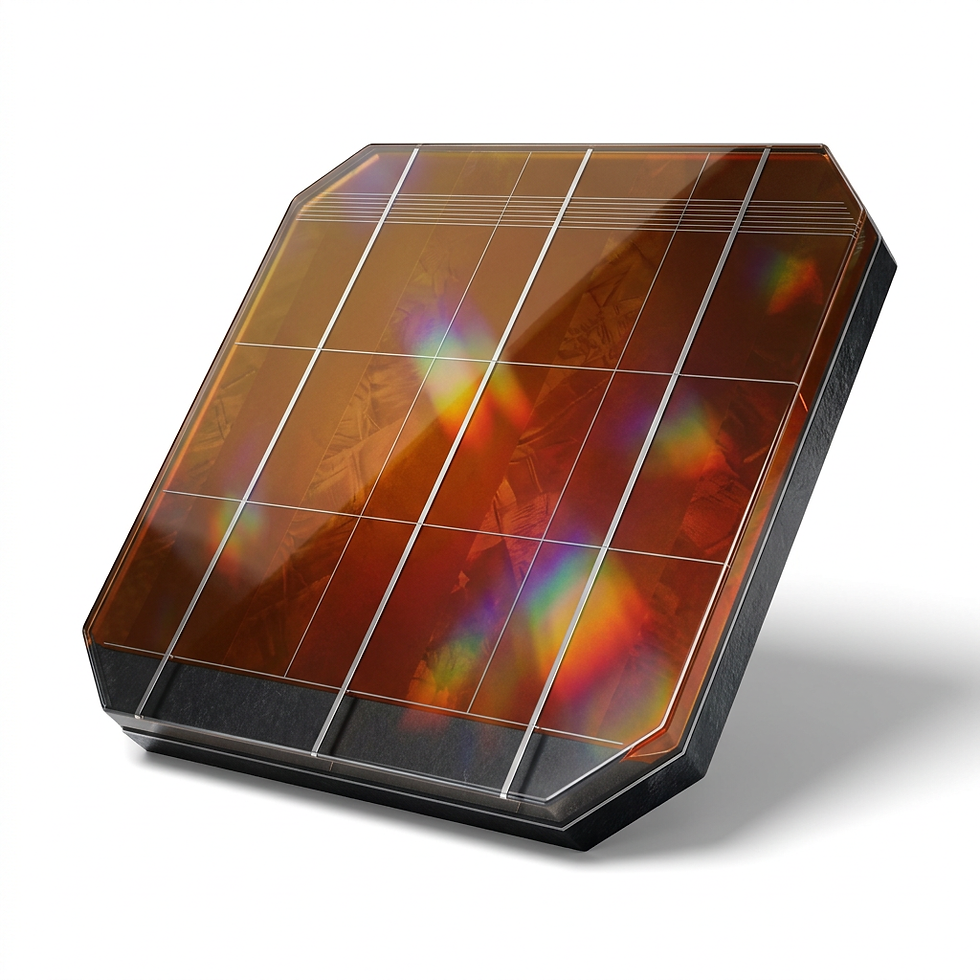
Heterojunction Solar Cells.
Astrophysics & Energy
Excellence in PECVD
Sep 21, 2026
Sep 26, 2026
10 - 11:30 am
Advanced Integrated Process
Manufacturing Innovated
Sep 28, 2026
Oct 2, 2026
10 - 11:30 am
Vertically Integrated Solar
PV Value Chain
Oct 5, 2026
Oct 9, 2026
10 - 11:30 am
HJT-TOPcon-Perovskite
Genesis Fusion Solar Cell Technology
Oct 12, 2026
Oct 16, 2026
10 - 11:30 am
Genesis Fusion Manufacturing
QX Epitaxial Wafers for Semiconductors
Oct 19, 2026
Oct 23, 2026
10 - 11:30 am
NAED manufactures advanced heterojunction (HJT) solar cells designed for high efficiency, long operational lifetimes, and superior performance in real-world conditions. Built on high-purity monocrystalline silicon wafers, these cells combine advanced passivation layers, precision deposition technologies, and bifacial architectures to maximize energy generation.
Our solar cells are engineered for next-generation utility-scale solar systems, advanced energy infrastructure, and energy-intensive industries seeking reliable clean power.
Nuvex Glass Melting Technology.
Nuvex Group's cutting-edge 3.5 million sq ft technology complex, the largest in the USA, is coming to Nevada. In partnership with Horn Glass Industries, we are bringing the largest Float and Pattern Glass manufacturing facility in the country.
Our state-of-the-art complex is designed to elevate your business by integrating the latest technological advancements. Specializing in the design, development, and manufacturing of next-generation aerospace systems and propulsion devices, our complex will feature advanced laboratories and manufacturing units equipped with the latest innovations in aerospace engineering, energy-efficient propulsion systems, and integrated aerospace solutions.
Float glass furnaces are the largest type, both with regard to dimensions and overall melting output. These furnaces are close to the limit of constructive possibilities, with capacities typically ranging between 600 – 800 tons per day (t/d). Smaller units with 250 t/d and larger units up to 1200 t/d are also possible. Float glass furnaces are especially designed for the production of soda lime glass, with stricter quality requirements compared to container glass.


Float glass furnaces are usually cross-fired furnaces. The regenerators, port necks, and burners are arranged laterally. For each port neck, there is a separate regenerator chamber together with a slide at the flue gas channel.
This allows precise control of the furnace temperature over the entire length of the melting furnace. The firing is usually facilitated with underport burners. Oxyfuel burners installed in the sidewall near the charging zone are called zero-port boosting.
This is a measure to increase melting capacity without enlarging the regenerator structure. Float glass furnaces are constructed as open furnaces. A clear separation of the hot melting part and refining part and of the working end is not possible, as this would lead to optical defects in the glass.
Our engineers will leverage breakthrough materials, such as high-performance composites and advanced alloys, to develop the propulsion devices of the future, including electric propulsion systems, hybrid engines, and other cutting-edge aerospace technologies. These advancements will not only meet but exceed the demands of future aerospace missions.
The facility will also integrate automated and intelligent manufacturing processes, including precision machining, additive manufacturing (3D printing), and advanced assembly lines. This will ensure the highest levels of quality, efficiency, and scalability in production, positioning us as leaders in the aerospace industry and driving forward technological progress in both commercial and defense aerospace sectors.
By partnering with Nuvex Group and Horn Glass Industries, you'll have access to unparalleled resources and expertise, empowering your business to stay at the forefront of technology and innovation.

About Us.
Our state-of-the-art glass manufacturing facility at Nuvex Group leverages a data-driven approach to solve the challenges faced by modern businesses. We partner with companies of all sizes, across various industries, to help them achieve their goals and aspirations through cutting-edge glass solutions.
Our team is passionate about providing customized manufacturing solutions, tailored to the unique needs of each of our clients. Whether it's float glass, pattern glass, or innovative glass technologies, Nuvex Group's advanced facilities and expert engineers are here to elevate your business.

Technology.
NAED solar cells use a multi-layer heterojunction architecture combining crystalline silicon with advanced thin-film materials to minimize recombination losses and maximize carrier mobility.
Key characteristics include:
-
Ultra-low surface recombination
-
Advanced passivation using SiOx and amorphous silicon layers
-
Low-temperature deposition processes
-
High bifacial energy capture
-
Long-term stability and durability

NAED Solar Cell Products: Redefining Global Energy Efficiency Standards.
NAED Apex Bifacial HJT Cell
(SC7-HJT1) 25.5% Efficiency, 182mm, High-efficiency module assembly
NAED Vanguard Shingled HJT Cell
(SC7-HJT2) 26.0% Efficiency, 210mm, Custom bifacial R&D
NAED ScaleMaster Optimized HJT Cell
(SC7-HJT3) 25.0% Efficiency, 182mm, Volume production lines
NAED Twilight Enhanced HJT Cell
(SC7-HJT4) 26.2% Efficiency, 210mm, Enhanced low-light, Advanced prototyping
The NAED SC7‑HJT family consists of n-type heterojunction silicon solar cells, combining crystalline silicon wafers with amorphous silicon passivation layers. This architecture enables high open‑circuit voltage, low temperature coefficients, and minimal light‑induced degradation.
Our solar cell lines are optimized for HJT bifacial production, with n-type silicon bases and efficiencies from 25% to 26.2%. Available for custom assembly, each cell features low recombination losses and high bifaciality.
Performance.
NAED HJT solar cells are engineered to achieve efficiencies approaching 28%, with bifacial architectures capable of capturing energy from both front and rear surfaces.
Performance advantages include:
-
High open-circuit voltage
-
Strong low-light performance
-
Reduced degradation over time
-
Optimized power output for utility-scale systems
Applications.
-
Utility-scale solar power plants
-
Data center energy infrastructure
-
Industrial power systems
-
EV charging infrastructure
-
Distributed energy systems